Monday, March 09, 2009

Attukal Pongala - an event to remember

Scenes from a day before (9th March 2009)

Attukal Pongala is held in Trivandrum during February - March at the premises of the Attukal Devi Temple. Last year, 25 lakh (2.5 million) women perfomed 'pongala'. This event has been seen and intrepreted in different angles, religious, spiritul, feminism, socialogical etc. To me, a city with a permanent population of about 8 lakhs, hosting an event where 3 times the numbers participate, it a challenge in management - civic, logistics, law and order, environment, public health, etc.
Women line up the pavements in Thampanoor, 2-3 kms away from the temple, the day before the event.


Brisk sale of clay pots in progress.---->


<-Pongala devotees staking their claim for position one day before the event, in front of Trivandrum Central Railway station


An image of Devi annihilating the demon -->


Saturday, February 03, 2007

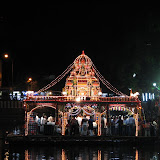
Theppam festival at Mylapore Kapali temple 2007

Theppam
(click picture to view the full album)

The annual float festival in the Kapliswarar tank is held normally for three days starting from Thai Poosam (February?) . On the first day, Kapaleeswarar and Karpagambal are taken on the float. On the second day, Murugan with Valli Devyanai are taken. The float is constructed on several barrels. Vedic scholars and musicians travel along with the float which goes for three rounds starting after dusk and ending around 9-30 p.m. Here are some images of the second day(2007). After a long gap, the tank is having water only in the last two years.

Saturday, January 06, 2007

Mylapore Collage

A collage of images in and around the Kapali Temple during evening hours. (Chennai , India) Preparing for the Mylapore Festival. Posted by Picasa

Tuesday, December 19, 2006

An Indian amateur photographer in the '60s


This picture of Gandhi Mandapam through the gate was taken by me in 1966 when I was a student of Engineering at the AC Colelge of Technology which was just opposite to this. The camera was a heirloom Kodak Duaflex. This is a hip level viewing twin lens reflex camera, focus free and fixed exposure (+bulb). It take 12 exposures In sqare format (6cm x 6cm) on a 620 size roll film.The film itself was 6cm x 72 cm and some other cameras use the same film in different formats - 8 exposures of 6cm x 9 cm or 16 exposures of 4.5cm x 6 cm .

Click here to view an image of the camera

( a contact print)
Only B&W films were available in India then. 620 size film also was not very common, but it was identical to 120 film but for the spool. I used to save old 620 spools and request the studio to rewind 120 film on 620 spools, if the latter was not available. see: http://camerapedia.wikia.com/wiki/620_film


Flash: Photogrphy itself was a luxury then. Flash for an amateur was the ultimate. We had disposable flash bulbs which had a long filament coiled inside a bulb. The flash bulbs were very expensive and many may be wasted due to mistakes of the photographer or the manufacturer. sometimes the ejector mechanism in th eflashholder may not work and one had to wait till the fused bulb to cool before replacing for the next shot. I never tried them anyway.

Periodicals: We had no access to any magazine dedicated to photography. If you were lucky some friend or relative would give you a foreign photo journal which was as prized a possession as a smuggled copy of 'Playboy'

Agfa India used to bring out a small newsletter with useful tips. Though this was free, the distributors were relcutant to give out to bumbling young amateurs.

Journals like 'Illustrated Weekly of India' had works of leading photographers. I remember the works of Krishnan and his wild life. fortunatley I had access to old issues of 'Life' and 'National Geographic' from my uncle's collection.

Double exposure:since Duaflex had a manual advance (like all cameras then) many times you end up with multiple exposures on single frame accidentally. Occasionally,you can put this to creative use too.

Cost: Every roll of film which we exposed over several months, used to put a big hole in our allowances and we often felt guilty about spending. However, the shared joy of the family in seeing the results more than compensated for this.http://camerapedia.wikia.com/wiki/620_film

Tuesday, May 30, 2006

Batu Caves


Batu Caves
Originally uploaded by shutterbug_iyer.
The majestic statue of Lord Muruga adorns the entrance to the Batu Caves, near Kuala Lumpur, Malaysia. The Limestone caves are many thousand years old. A murugan temple is situtated inside the caves , which is reached by climbing the 272 steps. There are smaller caves too. The Ramar Gallery, the Art gallery , the Valluvar gallery are also popular. The Hindu festival of "Thai Poosam" brings over a million devotees to the temple. Six shrines depicting the "Arupadai veedu" of Lord Muruga are at the lower level.

Tuesday, May 23, 2006

Durian


Durian
Originally uploaded by shutterbug_iyer.
The roof of the Esplanade - the Theatre by The Bay, Singapore. Shaped like the Durian fruit

Sunday, April 09, 2006

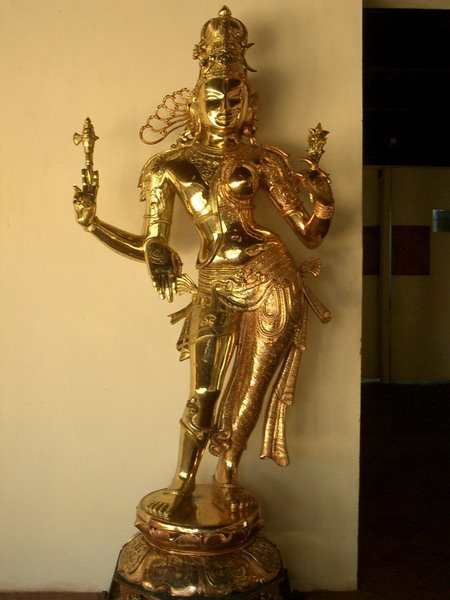
Bronze Ardhanareeswara


Bronze statue of Ardhanareeswara- male - female forms of the divine. Swamimalai, Kumbakonam
(Sterling Resorts, Swamimalai)

Darasuram, Airavateeswarar


A horse and chariot wheel motif on the steps of the mandap. 12th Century Chola architecture at Darasuran, near Kumbakonam, Tamil Nadu. A UNESCO maintained heritage site.

Saturday, April 08, 2006

Darasuram


The Airavateswara temple at Darasuram, near Kumbakonam, Tamil Nadu. Built in the 12th century by the Cholas.
The temple has some exquisite stone carvings, some which are shown here.

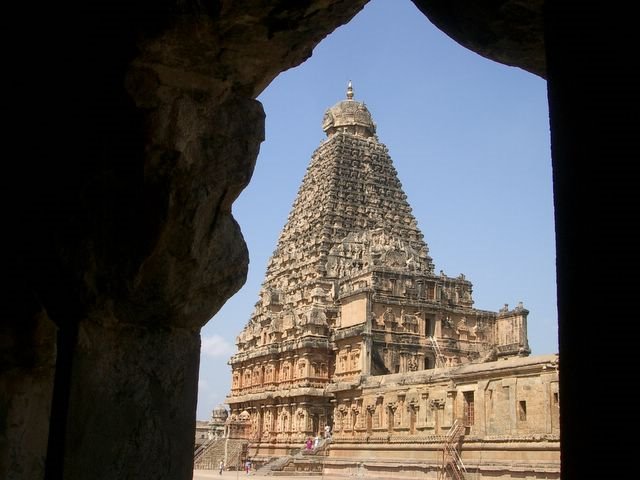
Thanjavur, Kumbakonam, Swamimalai, Darasuram


Thanjavur Big Temple
(c) V.Harihara Subramanian

Monday, July 04, 2005

Photoes

Photoes

A fine example of Vijayanagar sculpture
(c) V.Harihara Subramanian

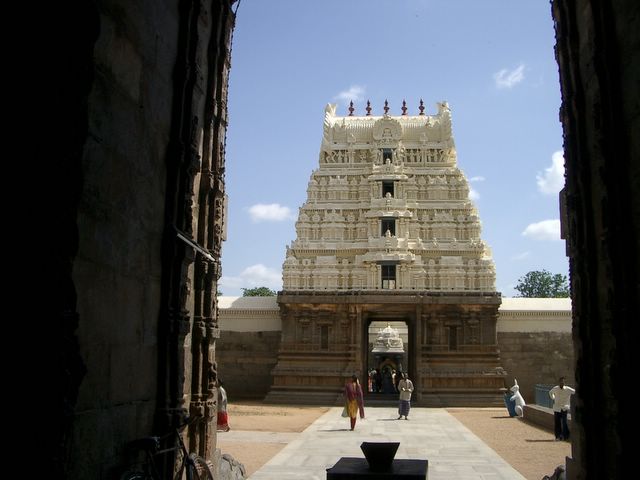
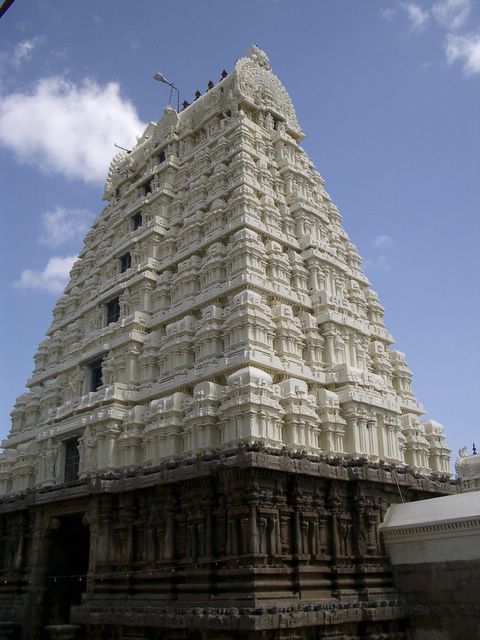
Gopuram at Vellore


Inside gopuram at Jalakandeswarar temple, Vellore
(c) V.Harihara Subramanian

Jalakandeswara Temple, Vellore Fort
(c) V.Harihara Subramanian

A friendly villager near Swamimalai footpath
(c) V.Harihara Subramanian

A trek to the Swamimalai (4500ft)
(c) V.Harihara Subramanian